Click to view larger

For a quick ST-RISKTM analysis, you only need to supply the following information:

1. Building Location (latitude and longitude)
2. Building Class (FEMA 310 building class)
3. Building Height (number of stories or total height)
4. Year Building was Designed (building code year)
5. Evaluation Lifetime (years under consideration)

ST-RISKTM references internal databases to complete the detailed description of building characteristics based on the five basic parameters. For example, the program will search a digitized soils and liquefaction database to find the appropriate site-specific geotechnical conditions (from CDMG).

ST-RISKTM will then use the design year to determine specific building characteristics typical for its construction type and design time period. Using the building type and height, ST-RISKTM will develop a fundamental building period and gather related information. Finally, ST-RISKTM conducts a quick seismic risk assessment based on these values.

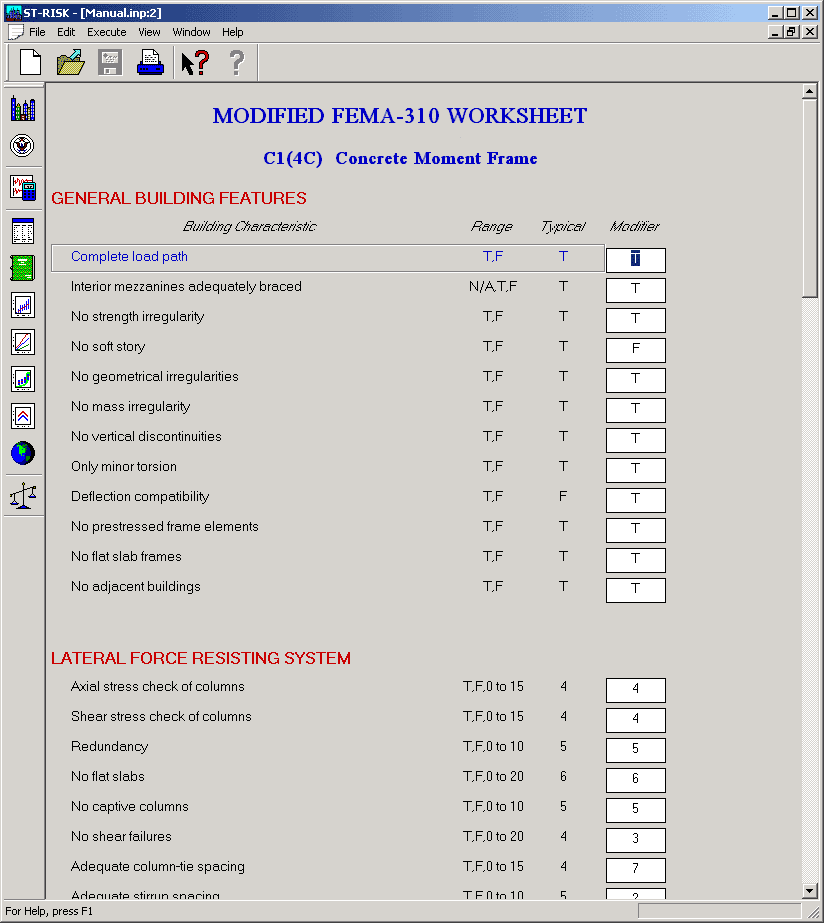
For the engineer performing a detailed analysis on specific building and soil characteristics, ST-RISK
TM provides a worksheet for the identification of items important to seismic performance. This level of analysis must be completed by a licensed engineer.

Most of the worksheet items require TRUE/FALSE choices. Some require judgmental values within specified ranges. Typical values are supplied within the worksheet to help you with the evaluation process. The ST-RISKTM help system also contains a substantial amount of applicable FEMA-310 documentation. In this way, you have immediate help on any questions regarding the worksheet input.